Resume CreationAugust 11, 20262 min read2 views
What’s the Difference Between a CV and a Resume?
Qlimb Up
Author


Qlimb Up
Author
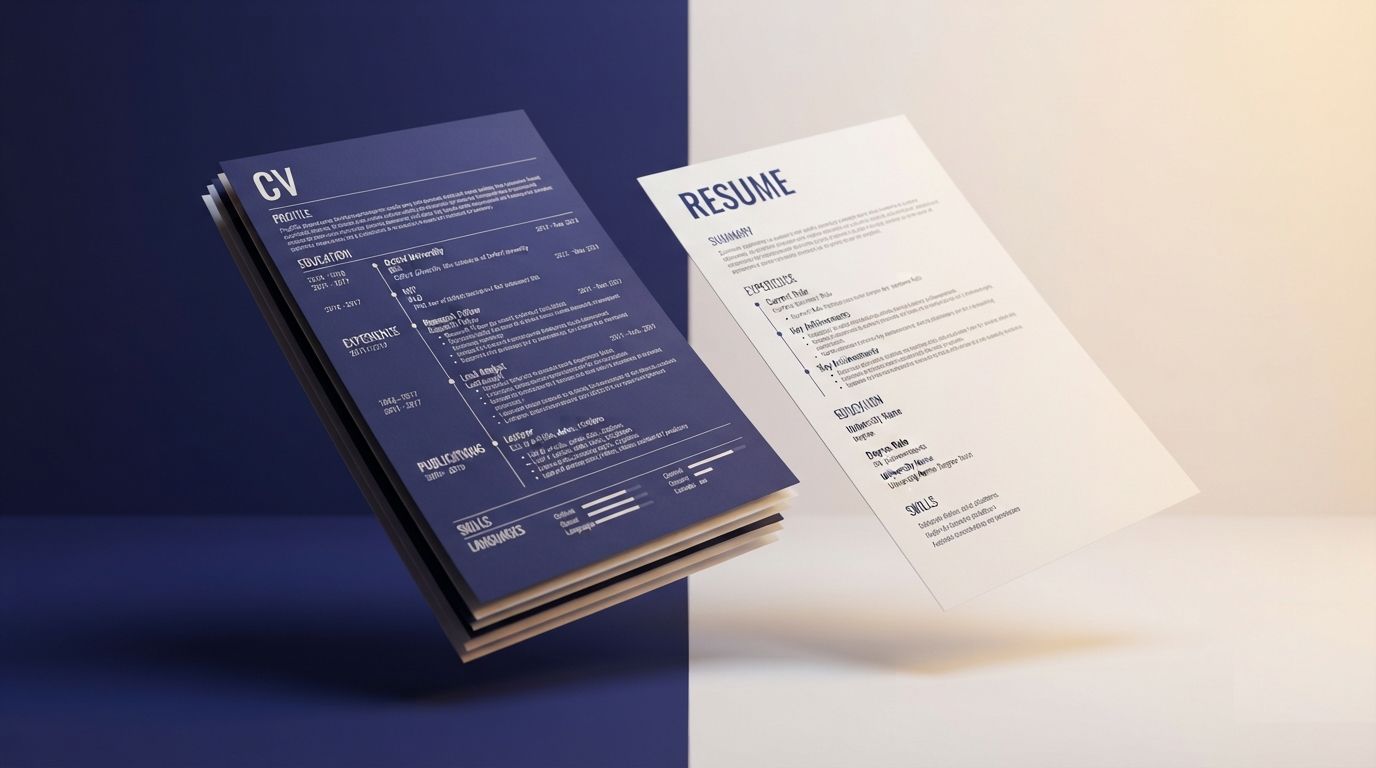
The difference between CV and resume documents comes down to length, purpose, and geography: a resume is short and tailored per application; a CV is comprehensive and largely static across your career.
| Factors |
Resume |
CV |
|---|---|---|
|
Length |
1–2 pages |
Can run several pages |
|
Purpose |
Tailored per job |
Comprehensive career record |
|
Common in |
Most industries, US private sector |
Academia, research, international roles |
|
Updates |
Frequently, per application |
Grows over time, less frequently rewritten |
No, while the terms are sometimes used interchangeably in casual conversation, they serve different functions. Is a cv a resume in practice for most US private-sector jobs? Functionally, when a US employer asks for a “CV,” they usually mean a resume — but always check the specific application instructions to be sure.
CV or resume difference matters most based on geography and field:
US and Canada, private sector: resume
Academia, research, medicine, most of Europe: CV
Government and international organizations: often CV, but confirm specific requirements
A related but separate distinction: cover letter vs resume — a cover letter is a narrative document explaining your motivation and fit for a specific role, while a resume (or CV) is a structured summary of your qualifications. They serve complementary, not overlapping, purposes.
To define resume and CV simply: a resume is a concise, tailored snapshot of your most relevant qualifications; a curriculum vitae is a complete, evolving record of your academic and professional history.
What’s the main difference between a CV and a resume?
Length and purpose: A resume is short and tailored per job, while a CV is a comprehensive, evolving career record.
Is a CV the same as a resume in the US?
Often used interchangeably in casual requests, but formally they’re different documents. Check the specific application’s expectations.
Do I need a CV or a resume for an academic job?
For academic and research positions, almost always expect a comprehensive curriculum vitae rather than a short resume.